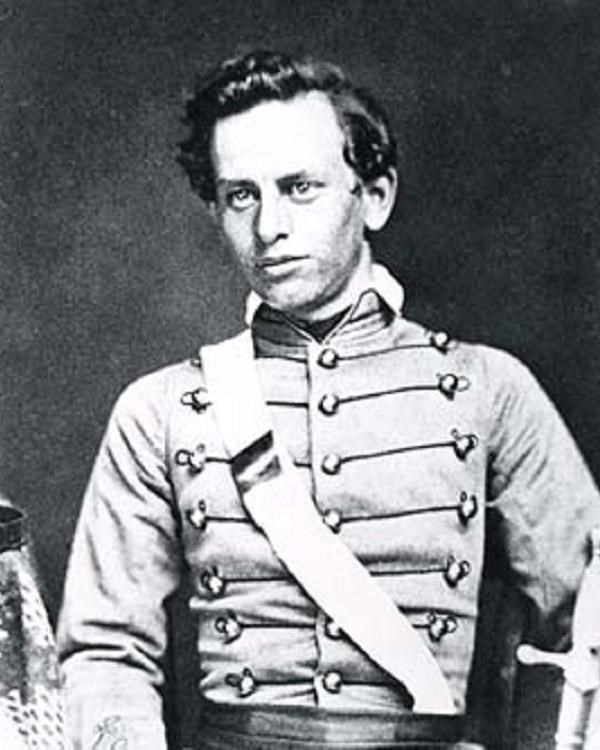
Henry Martyn Robert
It's not my goal to make you all parliamentary experts by the end
of this session.
It is my goal to...
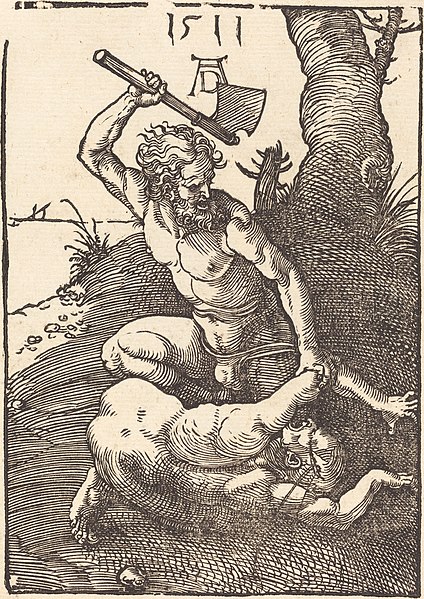
The alternative is death and destruction.
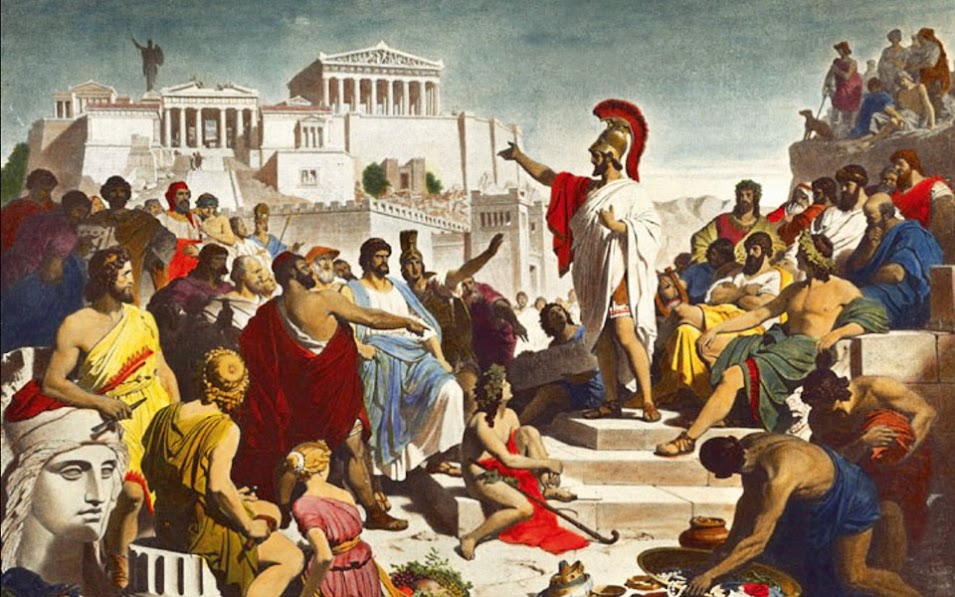
Early on we figured out that rules for civil discourse was a good idea.
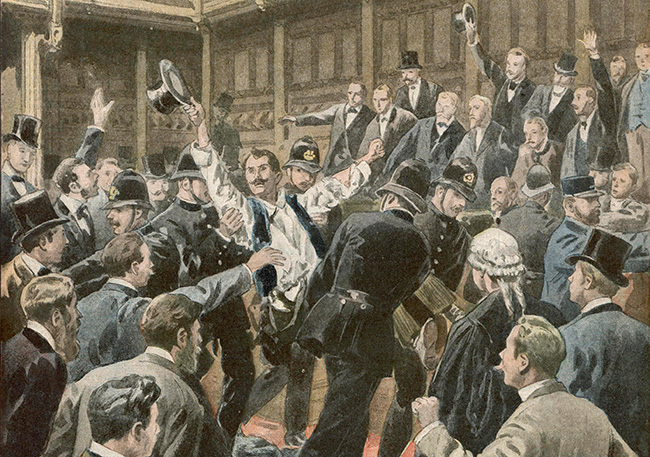
There have been times when the rules broke down.
But that's the world; we are the church. Why do we need rules?
Henry Martyn Robert
| One can scarcely have had
much experience in deliberative meetings of Christians
without realizing that the best of men, having wills of
their own, are liable to attempt to carry out their own
views without paying sufficient respect to the rights of
their opponents. --- Henry M.
Robert*
Where there is no law, but every man does what is right in his own eyes, there is the least of real liberty. --- Henry M. Robert†
It is difficult to find another branch of knowledge where a small amount of study produces such great results in increased efficiency in a country where the people rule, as in parliamentary law. --- Henry M. Robert†
*US Army Corps of Engineers, Historical Vignette 038 - An Army Engineer Brought Order to Church Meetings and Revolutionized Parliamentary Procedure. †Robert's Rules of Order, Newly Revised, 10th Ed., p. v. |
 Click Here |
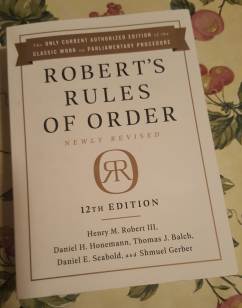
For good or ill, Robert's Rules of Order, Newly Revised,
latest edition, is our parliamentary authority.
Deliberation is the essence of a deliberative assembly.
Deliberation is enhanced when we preserve and balance...
In addition to Robert's Rules of Order, there are other
rules that affect the way an assembly works. Convention standing
rules are special rules specific to a given assembly. They
supersede Robert's Rules of Order. There may also be
things in a society's articles of incorporation, constitution,
bylaws, and standing rules (continuing resolutions) and even the
laws of the state that supersede as well.
Downloadable Resource: Parliamentary Procedure---Common Motions
What is the greatest tool in the deliberative assembly (for the
parliamentary novice)?
Parliamentary Inquiry
If the question is not pressing (or complicated), you may want to ask the parliamentarian in a sidebar conversation or seek the help of another member versed in procedure.
— a query directed to the chair, asking procedural advice or a clarification of procedure.
And the second is like unto it...
Time to play...Request for Information
— a.k.a. Point of Information, this is a query directed to the chair (or to a member through the chair), asking for facts related to the matter at hand (unrelated to procedure).
|
Resolution: "Support Decade of Action to Improve Church
Coffee Hours" Resolved, That the 2023 Synod
Assembly of the Greater-Lower-East Prairie Synod express
continued support for the ways in which the synod
congregations can strengthen their quasi-sacramental
practice, by improving the quality of coffee served
following the principal Sunday service; and be it further |
Act I, Scene 1
Setting: After some debate has already taken place on the motion.
Chair: The chair recognizes the member at microphone #1
Zwingli: Rev. Chair, I rise to a parliamentary inquiry.
Chair: Your question?
Zwingli: What would be the proper motion to mandate the use
of fair trade coffee?
Chair: The proper motion would be the motion to amend,
preferably by an insertion of a fifth directive under the third
resolving paragraph.
Zwingli: Thank you, Rev. Chair, what would be the precise
wording?
Chair: As the chair cannot know the details the member
intends, the chair recommends that the member seek the help of the
parliamentarian or some of the member during the coffee break.
Knox: Rev. Chair.
Chair: To what point does the member rise?
Knox: A parliamentary inquiry: As there is a risk that we
might conclude debate on this resolution before the coffee break,
how might we guarantee that Meister Zwingli's concern is
addressed?
Chair: One could move to postpone debate until after the
next coffee break.
Knox: So moved.
Personal Privilege— relates to procedural problems; equivalent to calling a foul.
— really a catch-all category that can have lots of uses, but, here, we want to focus on matters related to the member's participation in the assembly.
Act 2, Scene 1
Setting: After some debate has already taken place on the motion, Eck is in a middle of his speech
Eck: And, so, Rev. Chair, while it is important not only that we have access to food and drink, we should not allow these concerns to overshadow the persistent problem we have had securing supply pastors especially at high—The point of amending is to perfect the language.— sooooo many terms (e.g., to insert, to add, to delete, to strike, to substitute), but they are all subforms of the motion to amend.
To Postpone (Debate)
To Table
These are not identical, and they have different uses.
Previous Question (a.k.a. Call the
Question)
Debate normally continues until no one comes to the microphone.
Sometimes, as has been said by others, "Everything that can be
said has been said, but not everyone has had the opportunity to
say it." The assembly can end debate on a matter by a ⅔ vote. When
previous question is moved, the assembly votes on whether
to continue debate. It is not a vote on the pending question
itself. If previous question fails, debate on the pending question
continues. If it passes, the next vote is taken on the pending
question.
To Refer
Sometimes the assembly doesn't have the information it needs or
the words need more work than the assembly can reasonably handle.
To refer sends the pending question (and everything
attached to it) to a committee or some agent with or without
instructions.
We are human beings, and we have needs.
To Recess
To Adjourn